
Antrop used several different label designs in just three years of production. There are six main types: plain logo, JCS (Jesus Christ Superstar), apples, target 1, target 2, and target 2 with flags.
Jesus Christ Superstar Antrop Labels

The first labels appeared with the release of the rock opera Jesus Christ Superstar. They showed angels, similar to the original artwork. Besides JCS, angel labels were also used for albums connected to church or classical music.
The Beatles’ Antrop Parody Labels
The pink apple—a parody of Apple Corp—was the trademark of Antrop’s edition of the Beatles’ White Album. It also appeared on records by The Stooges and Lou Reed, sometimes alongside other labels. You can tell the year of release by looking at the logo. In 1991, it was a separate Antrop symbol. From 1992 onward, it was combined with the Lutheran church logo.
Antrop Logo on White Labels
Some of the very first records had only the plain Antrop logo on a white background, with no graphics. For example, there was a Byrds compilation that looked like this.
Late 1991 Antrop and Church Labels
By late 1991, a transitional design appeared: the Antrop and Lutheran church logos were printed one over the other, with a brown target pattern in the background, numbered 1 to 9. Some examples of this are albums by Sonic Youth, Chris Jordan, and Solomon Burke.
Antrop Target Labels (with and without flags)
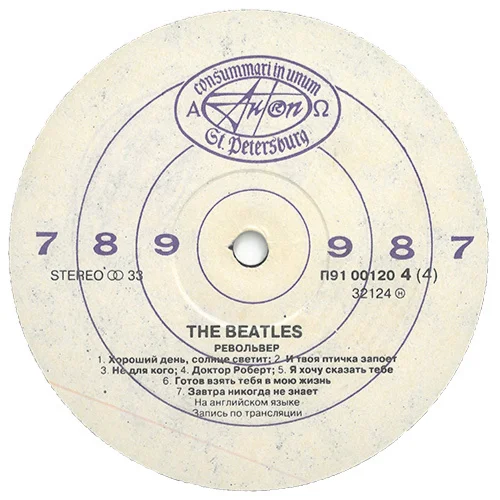
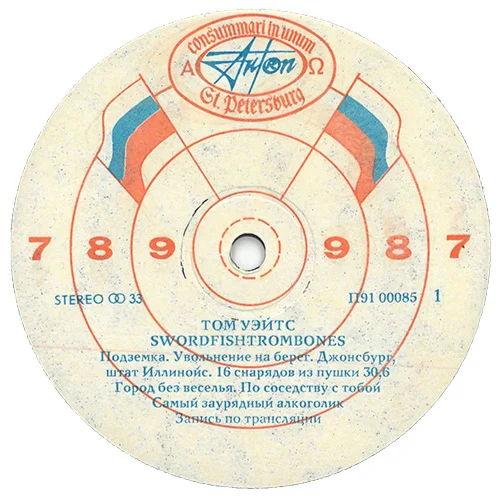
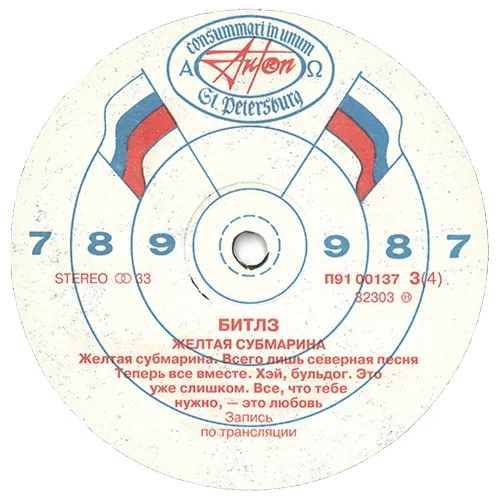
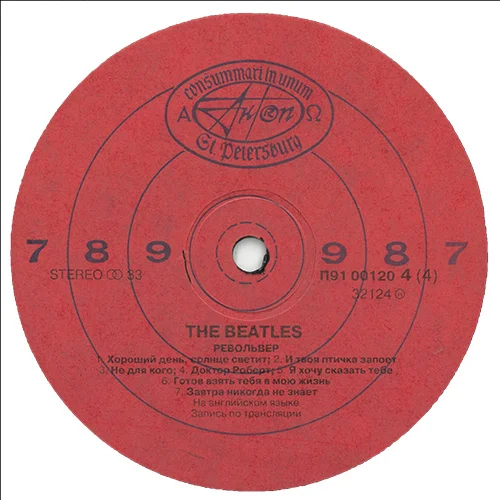
In 1991–1992, two new designs were introduced: one with flags and one without. These had numbers 7 to 9. A slightly different version with flags had already been seen in 1991 (on Tom Waits). Records made at the Riga plant had a purple target, but there were many different combinations of background and ink colors.
Late Antrop labels since 1993
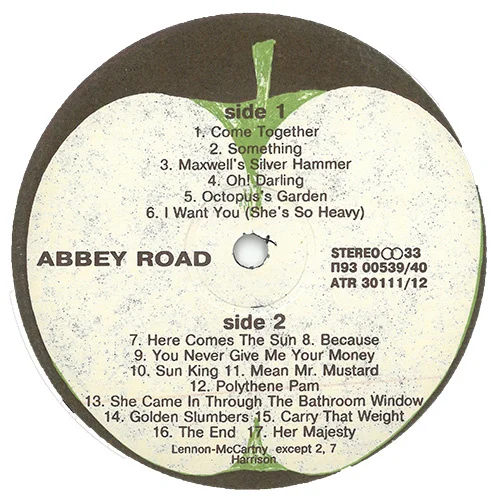
In 1993, more detailed graphics started to appear on records: a stylized title on Pink Floyd’s Animals, and a green apple on the Beatles’ Abbey Road.
Santa Bootlegs since 1994
From 1993 to 1994, Nikolai Kibaltchich and Andrei Shendrik produced new albums without Andrei Tropillo. The quality of records from this time period was very inconsistent. Releases with carefully designed labels and fewer translation errors were likely handled by Kibaltchich. Some bands used custom label designs with unique backgrounds and fonts on their albums. These bands include Pink Floyd (Final Cut, The Wall), the Beatles (Please Please Me, With the Beatles), George Harrison, Paul McCartney (Ram), John Lennon (Double Fantasy), and Ringo Starr.
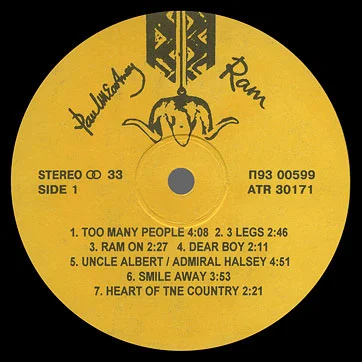
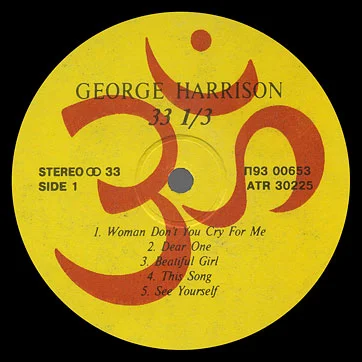
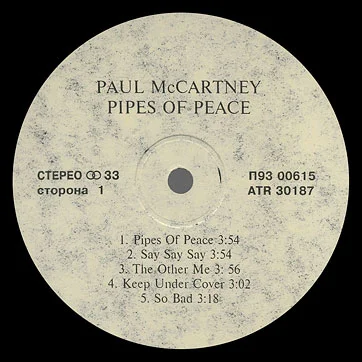
The first three letters of the catalog number on the label show the year it was made (or first published in Russia). This may not be the same year as the one printed on the sleeve. For example, many records marked “91” were actually released in 1992, while those marked “92” were released only in 1993, and so on.
Leave a Reply
You must be logged in to post a comment.