
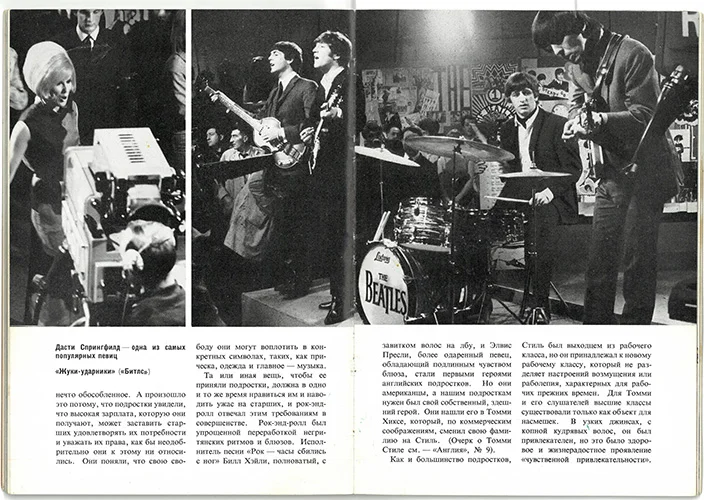
People in the USSR first learned about The Beatles in the early 1960s, at the peak of beatlemania. At that time, newspapers wrote sarcastic articles criticizing pop music. Soviet articles usually criticized The Beatles appearance and the “primitive” nature of the music. But then the situation slowly started to change.
Table of Content
- Soviet Press on The Beatles in the 60s
- The First Appearance On a Soviet Radio in 1966
- The First Official The Beatles Soviet Release
- The Beatles in Krugozor Magazine (Soviet Union, unofficial)
- Official but Illegal: The Beatles on Soviet EPs (Vinyl Minions)
- Licensed Beatles Records in the USSR
- McCartney’s Back to the USSR
- Unofficial Beatles Pressings (Late Soviet & Russian Releases)
Soviet Press on The Beatles in the 60s
One of the earliest publications, from 1964, “The Jumpers,” contained this passage:
“They called themselves the ‘Beatles,’ a word that can mean ‘little beetles,’ ‘snitches,’ or ‘jumping jacks.’ To be honest, they never expected to become famous around the world. It was just for fun—yelling, jumping, and shaking to music played on a washboard and other similar instruments. Also, the fans of these “beetle-jumpers” shout so loudly at their concerts that you can’t even hear the performers. What you can see are mouths that are twisted and hair that is unkempt covering the entire forehead.”
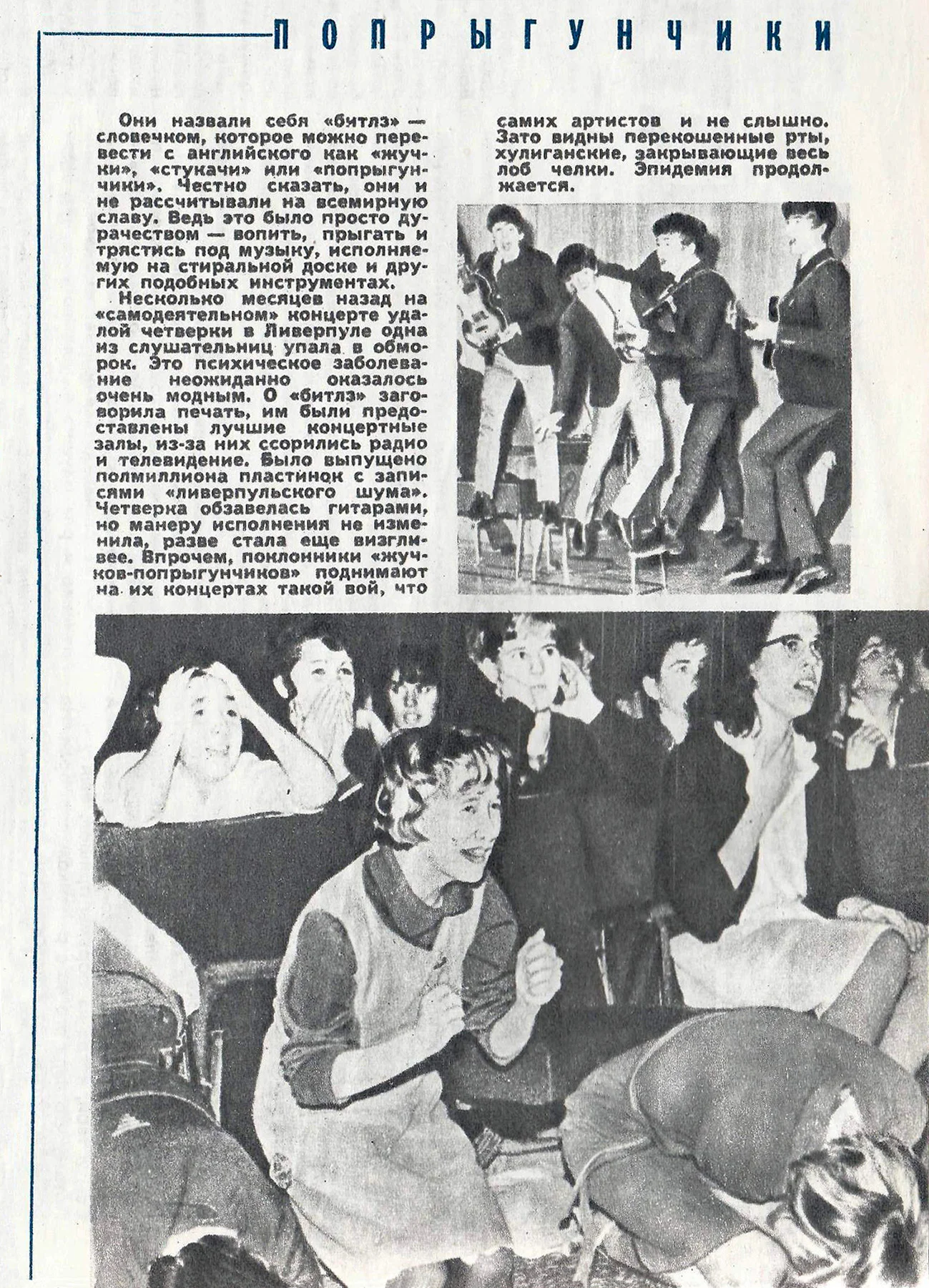
Other items about the group at the time had titles like «Pithecanthropus on the Thames,” “From the Life of Bees and Dung Beetles,” “For Beethoven and Bach—Against the Beatles,” and “Monkeys and the Twist.” Many of these stories were based on articles by Western journalists who also criticized the group in its early years. Soviet writers emphasized that musicians’ popularity is short-lived. They described The Beatles as unruly hooligans who would soon be forgotten.
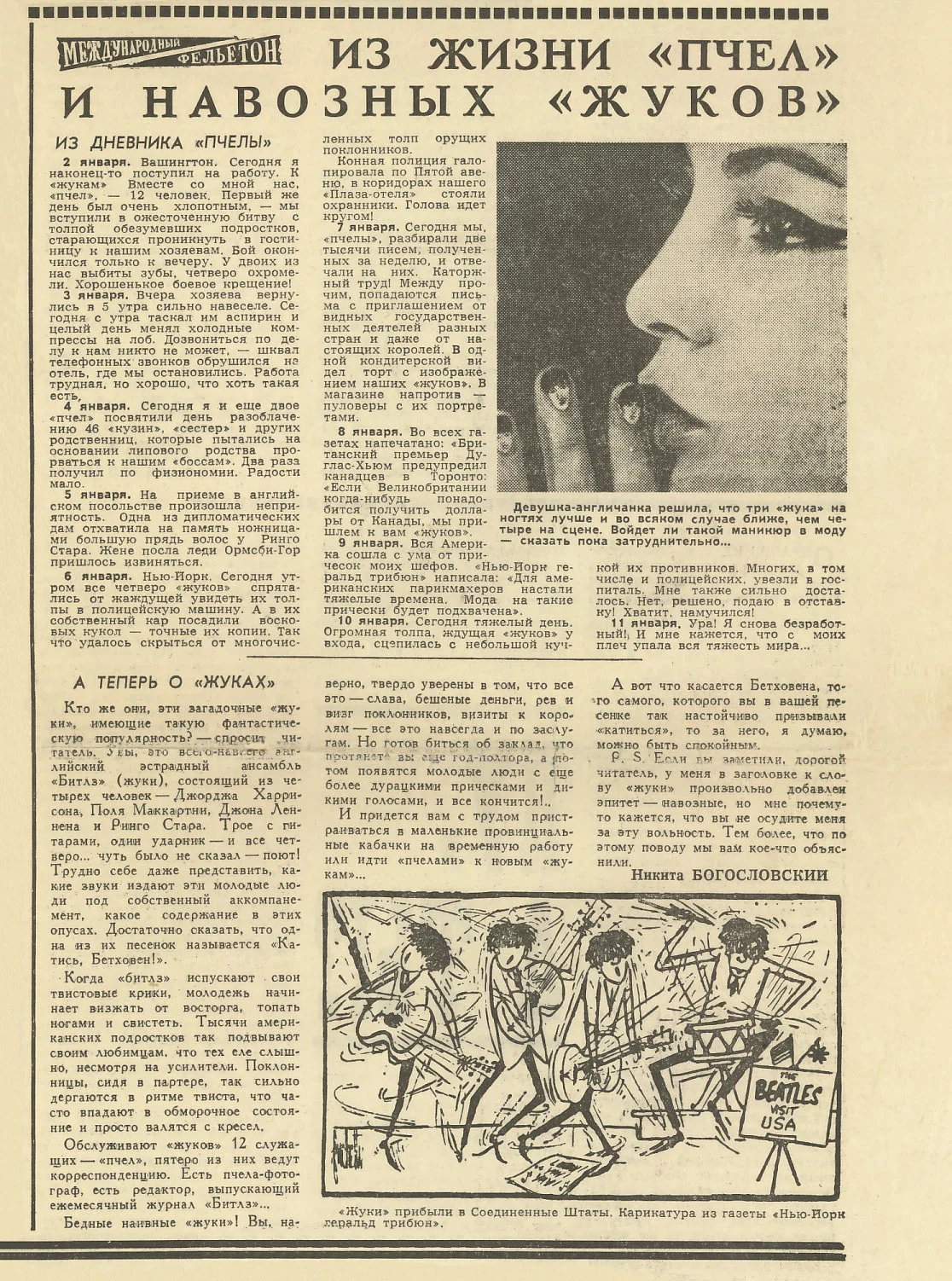
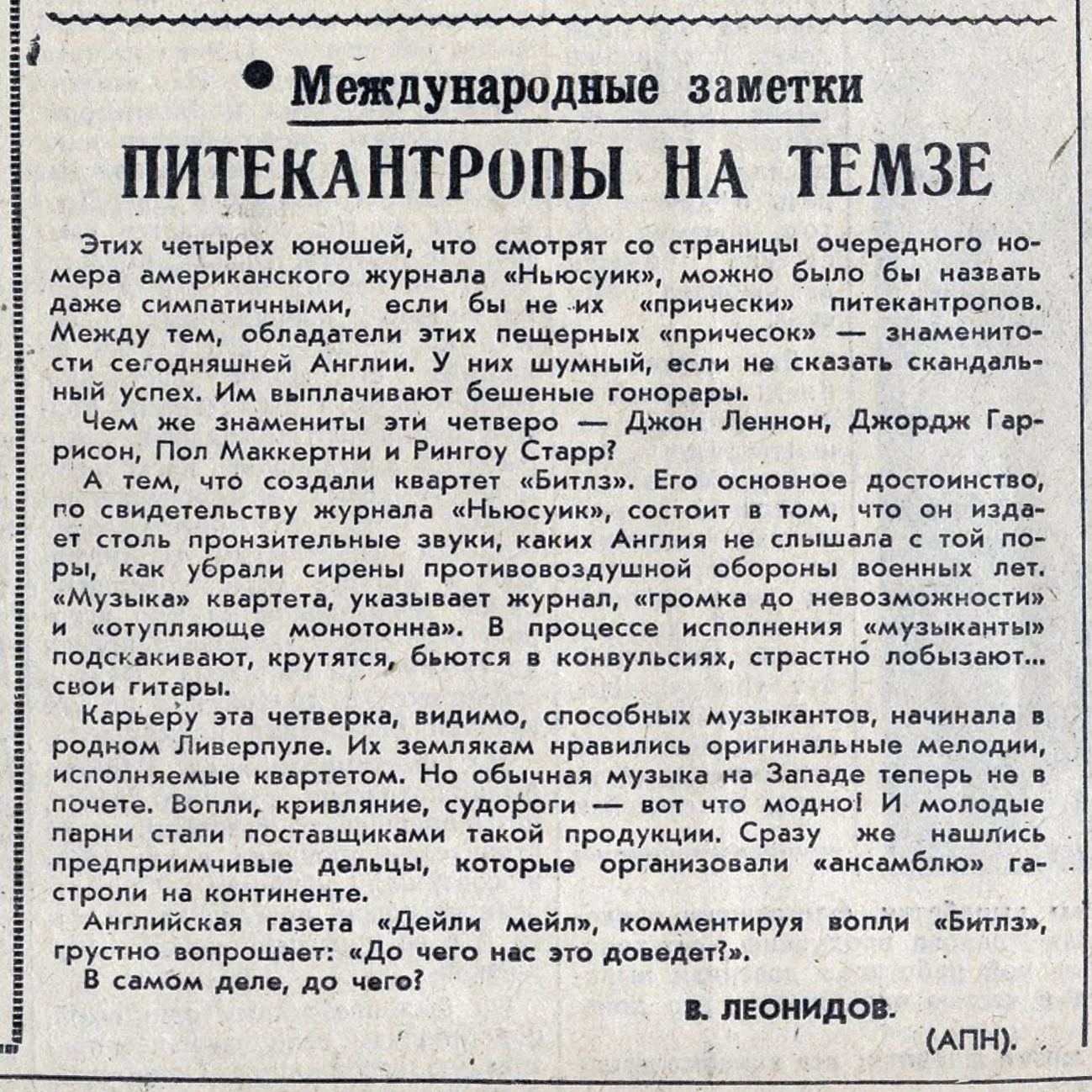
But Soviet youth didn’t pay much attention to the official press. People were used to the idea that if a newspaper criticized something, it was important. Although Western records were not officially sold in the USSR, there was no ban on the Beatles.
Starting in the mid-1960s, people found ways to bring records from business trips or to buy them on the black market. Diplomats, party officials, and even KGB employees brought in LPs with music that was considered harmful in the Soviet Union. The price of these records could reach an average monthly salary. So, most people recorded songs off the radio and from one another once tape recorders began to appear in the late 1960s.
This unofficial import of rare goods continued until the mid-1980s.
“People whose fathers sailed on ships and brought things from other countries would sell them,” says musician Boris Bardash. “Some people took specific orders. Others just bought whatever they thought would sell here. They didn’t care because there was a special group of people: all sorts of privileged kids, switched-on speculators. They had records, jeans, and plastic bags with pictures. Even a brand-name bag with some English writing and images was a popular item. They sold it for 2–3 rubles. That was very expensive. It was just a bag you could carry around with you, so people could see that you were part of a special group. This was the late 1970s and early 1980s.”
The First Appearance On a Soviet Radio in 1966
The first eight Beatles songs were played on Estonian radio in the Soviet Union on January 27, 1966. It was a mix of songs from the first four albums. In Estonia, as in Lithuania and Latvia, the authorities were more accepting of Western culture than in the rest of the USSR.
In April, an article titled “Idols and Idolaters” came out. In it, Aleksandr Konnikov talked about a summer 1965 concert and said the songs were good. “They are musical and artistic. They play the guitars very well. Many of their songs have hints of traditional Scottish folk melodies. The themes are ordinary and boring: love, going on dates, and whether or not the date goes well. The performers move well and put a lot of emotion into their performances.
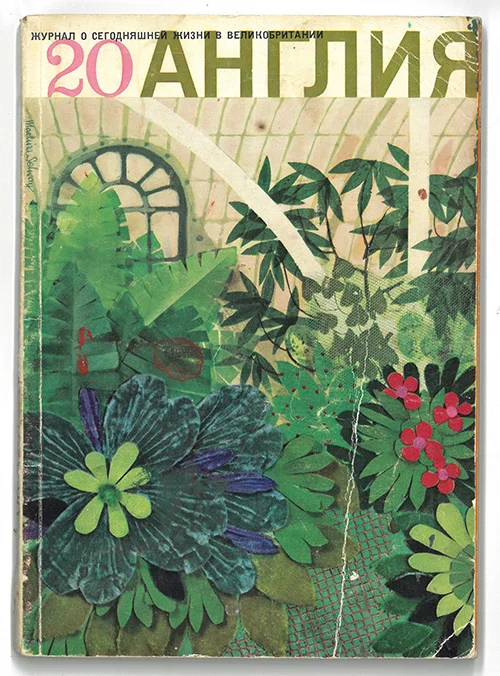
By the fall, the magazine Angliya, which published translations of English-language writings on culture, ran a very optimistic article by George Melly about the group and pop music as a whole. It seems to be the first publication in the USSR that talks about The Beatles and the Rolling Stones without laughing at them.
The First Official The Beatles Soviet Release
The first Beatles song in the USSR, “Girl,” was released in 1967 on the 10-inch record Musical Kaleidoscope No. 8 (33D-20227-28). It is the only Soviet record with a Beatles song released before the band broke up. The back cover names the group, but the music and lyrics were credited as “folk” (“народные”), and part of the Russian translation of the lyrics was printed alongside.
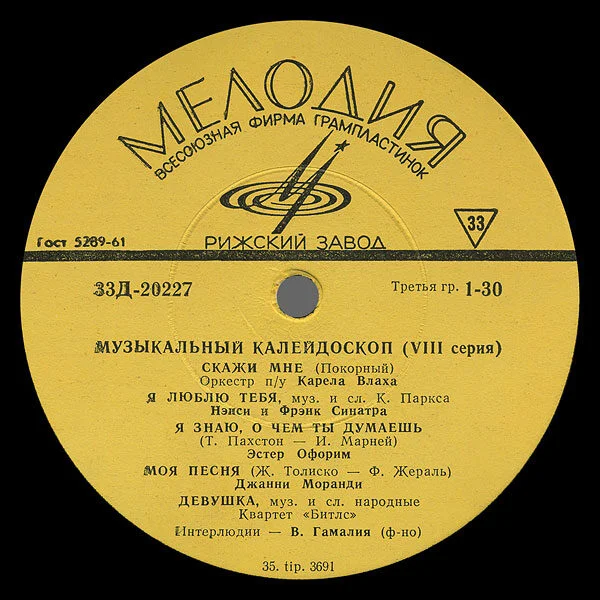
“As the record said, ‘music and lyrics: folk, in English’; the band’s name wasn’t there, but everyone knew it was the Beatles,” recalls artist Dmitry Shagin. “At dances in a Pioneer camp, we played this song. By the time I was 12–13, I already knew all about the Beatles. You could also hear them on Western radio. It was jammed, but you could still catch it—they played the Beatles there too.”
After that record, other musicians started releasing covers in both Russian and English. In 1968, Emil Gorovets was the first to record a slightly slowed-down version of “A Hard Day’s Night” and a Russian version of “Yesterday.” In 1969, he recorded “Ob-La-Di, Ob-La-Da” and “Lady Madonna,” just a year after the originals. (In the early 1970s, he moved to Israel and then to the United States because of Soviet antisemitism.) In 1970, a flexi-disc by the group Vesyolye Rebyata came out with a translated version of “Drive My Car.” In 1971, Golubye Gitary (Blue Guitars) recorded “I Saw Her Standing There” in English, fairly close to the original.
The Beatles in Krugozor Magazine (Soviet Union, unofficial)
In short, until 1973 there ware no modern-like copyright law in the USSR. This allowed Melodiya to avoid paying royalties for the use of recordings in the USSR and publish any music and texts freely. In a 2011 interview, Olga Markina, a Melodiya HR, said that the company just couldn’t have done things differently under those laws.
“A legal environment can’t exist in fragments or islands. Either it exists or, as with copyright in the USSR, it doesn’t. I understand the critics’ arguments, but Melodiya could not have been different inside a state with such an exotic legal framework. The choice wasn’t between the law and breaking it; the question was whether to work under those conditions or not. We chose to work.”
Paul McCartney
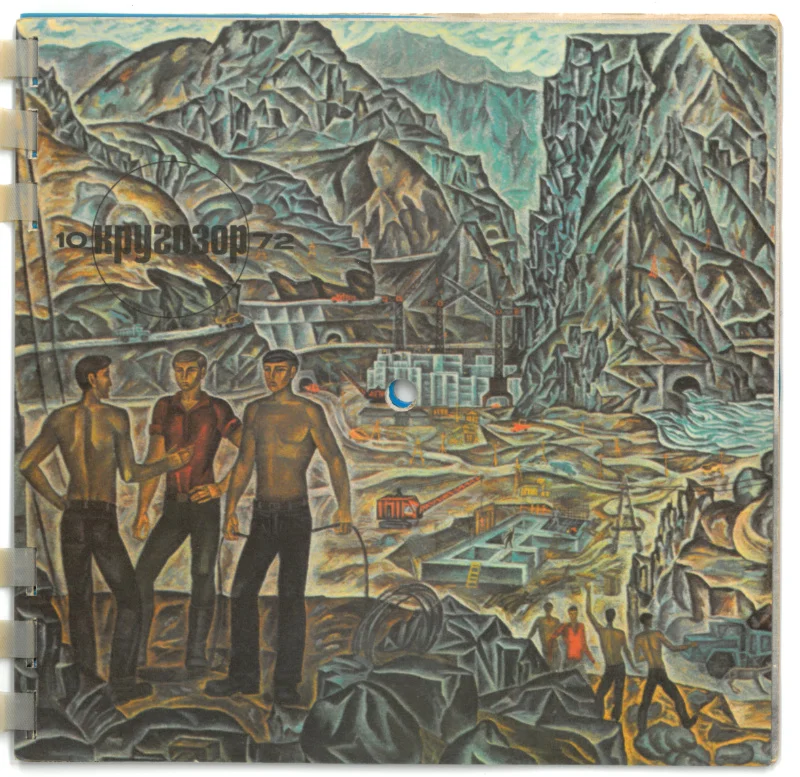
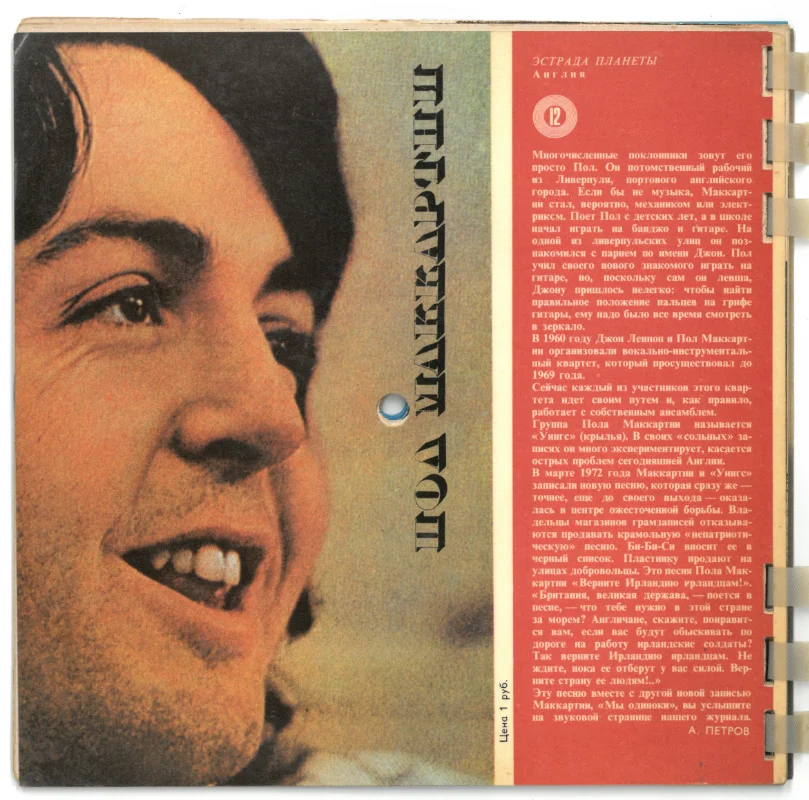
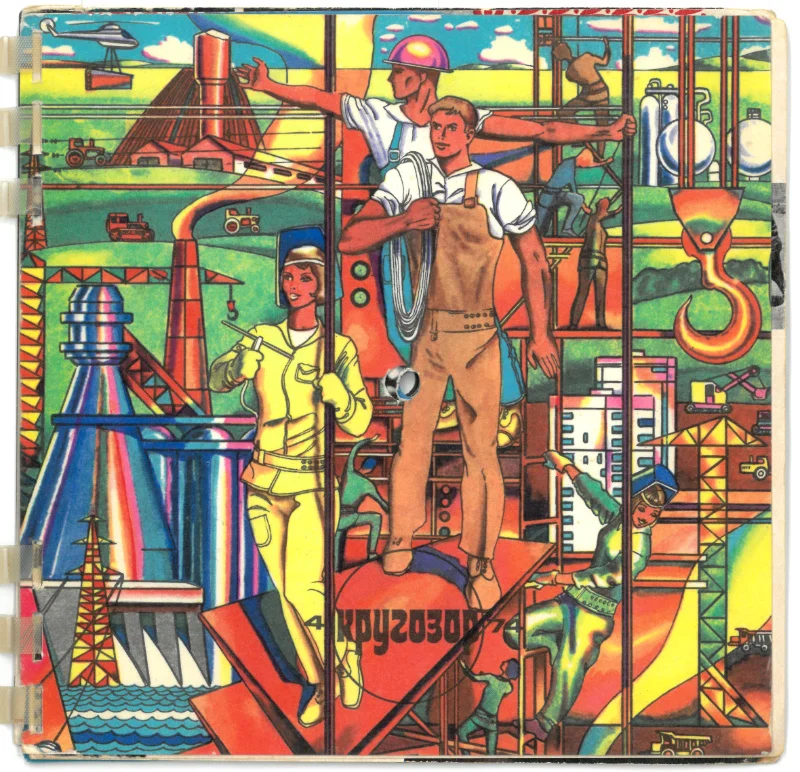
In October 1972, the magazine Krugozor put Paul McCartney’s “Man We Was Lonely” and “Give Ireland To The Irish” on its flexi-disc, along with an article about him (the author avoided mentioning “the Beatles,” calling them “a vocal-instrumental quartet that existed from 1960 to 1969,” but wrote favorably about Paul).
Paul McCartney’s review from Krugozor magazine, 1972
His fans simply call him Paul. He is a working-class man from Liverpool, an English port city. If not for music, he would probably have become a mechanic or an electrician. He has been singing since childhood and started playing the banjo and guitar in school. One day, on a street in Liverpool, he met a guy named John. Paul taught his new friend to play the guitar. However, since Paul was left-handed, it was difficult for John. In order to find the correct position for his fingers on the guitar neck, John had to look in the mirror the entire time.
In 1960, John Lennon and Paul McCartney formed a vocal-instrumental quartet that lasted until 1969. Now, each former member is going their own way, usually working with their own ensemble.
Paul McCartney’s band is called Wings. In his solo recordings, he experiments a lot and touches on pressing issues in modern-day England.
In March 1972, McCartney and Wings recorded a new song that became the subject of fierce controversy immediately—even before its release. Record store owners refused to sell the “unpatriotic,” seditious song. The BBC blacklisted it. Volunteers sold the record on the streets. The song was Paul McCartney’s “Give Ireland Back to the Irish!”. “Britain, great power,” the song goes. “What do you want with this country across the sea? Would you like it if Irish soldiers searched you on your way to work? So give Ireland back to the Irish! Don’t wait until it’s taken from you by force. Give the country back to its people!”
You can hear this song, along with another new recording,
by McCartney, “We Are Lonely,” on the audio page of our magazine.A. Petrov, a review from Krugozor Magazine, 1972
In 1973, the compilation album World of Songs (Mir pesen) included his song “Junk.” After that, Krugozor published several more articles about McCartney’s new works through the 70s and 80s.
John Lennon
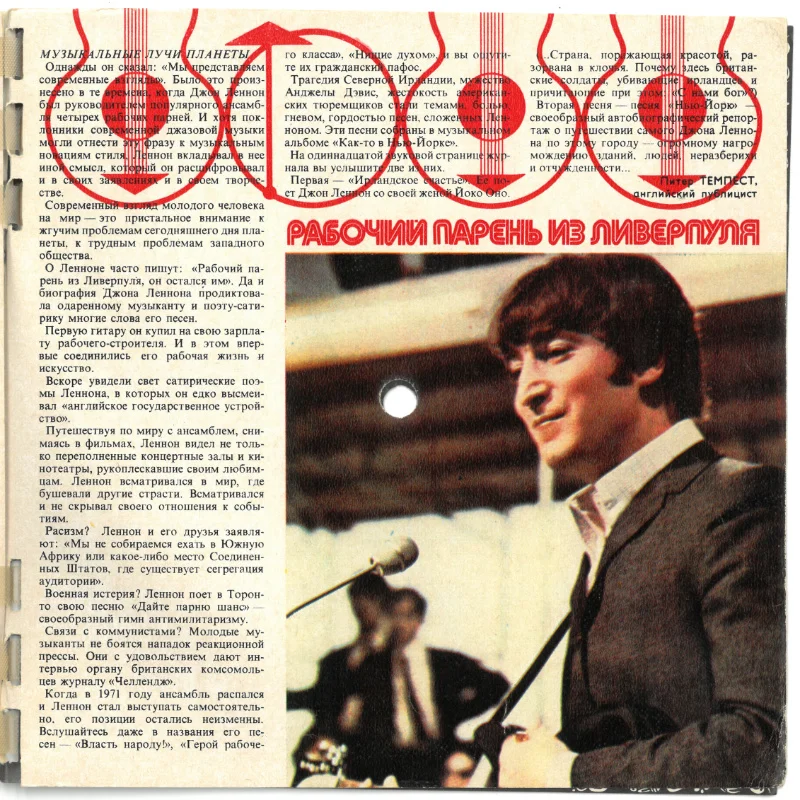
In April 1974, Krugozor published a positive article and two John Lennon songs—”Luck of the Irish” and “New York.” In the review, Lennon is described as a working-class lad from Liverpool. There are numerous inaccuracies and errors, for example, Give Peace a Chance is referred to as Give the Boy a Chance, and it is claimed that Lennon bought his first guitar with his earnings as a construction worker.
John Lennon’s review from Krugozor magazine, 1974
Musical Rays of the Planet
He once said: “We represent modern views.” This was said
when John Lennon was the leader of a popular band of four working-class guys. Although fans of modern jazz could relate this phrase to music,
style innovations, Lennon gave it a different meaning, which he explained in his statements and work.
The modern young man’s cry to the world draws close attention to today’s burning issues and the difficult problems of Western society.
People often write about Lennon, “A working-class guy from Liverpool, he remained one.” John Lennon’s biography influenced many of the lyrics of his songs.
He bought his first guitar with his salary as a construction worker. This is where his working life and art first came together. Soon, his satirical poems were published, in which he mocked the “English state system.”
While traveling around the world with the band and starring in films, Lennon saw not only crowded concert halls and movie theaters applauding their favorites. He looked into a world where other passions raged. He observed closely and did not hide his attitude toward events.Racism?
Lennon and his friends declare, “We’re not going to South Africa or anywhere in the United States where the audience is segregated.”
Military hysteria? Lennon sings his anti-militarist anthem, “Give the Boy a Chance,” in Toronto.
Ties to communists? The young musicians are not afraid of attacks from the reactionary press. They gladly give interviews to the British Komsomol magazine Challenge.
Even after the band broke up in 1971 and Lennon began performing solo, his views didn’t change.
Just listen to the titles of his songs: “Power to the People,” “Working Class Hero,” and “The Ballad of St. Peter’s Wreck.” You will feel their civic pathos.
The tragedy of Northern Ireland, the courage of Angela Davis and the cruelty of American prison guards became themes of songs filled with anger and pride. These songs are collected in the album Sometime In New York.
Two of them can be heard on the eleventh audio page of the magazine. The first is “Irish Song.” John Lennon performs with his wife, Yoko Ono.
George Harrison
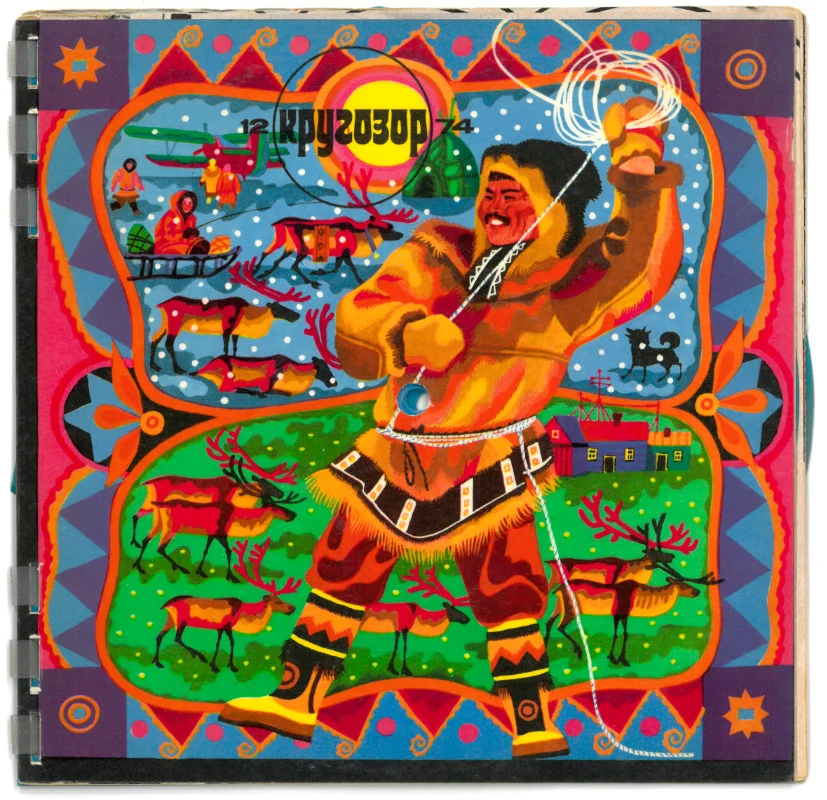
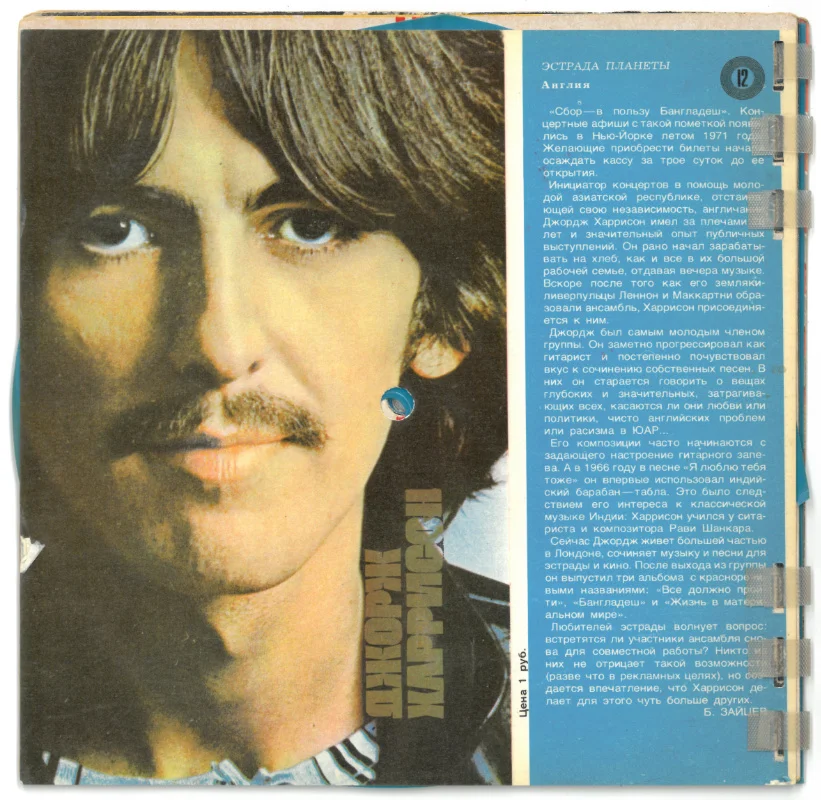
In December 1974, it published three George Harrison songs, including “My Sweet Lord” (which is remarkable given the USSR’s ban on religion), plus an article about the Concert for Bangladesh.
George Harrison’s review in Krugozor magazine, 1974
“Fundraiser for Bangladesh.” Concert posters bearing this inscription appeared in New York City in the summer of 1971. Three days before the box office opened, people began besieging it to purchase tickets.
George Harrison, the Englishman who initiated the concerts to support the young Asian republic in its fight for independence, had years of experience performing in public. Like everyone else in his large working-class family, he started earning a living early and devoted his evenings to music.
Shortly after his fellow Liverpool natives Lennon and McCartney formed a band, Harrison joined them.
He was the youngest member of the group. He made remarkable progress as a guitarist and gradually developed a taste for writing his own songs. Through his music, he tried to address profound and significant issues that affected everyone, whether they concerned love, politics, purely English problems, or racism in South Africa.His compositions often begin with a mood-setting guitar riff. In 1966, he used the Indian tabla drum for the first time in the song “I Love You Too.” This was the result of his interest in Indian classical music; Harrison had studied with sitarist and composer Ravi Shankar.
He now lives mostly in London, where he composes music and songs for stage and film. After leaving the band, he released three albums with eloquent titles: “Everything Must Go,” “Bangladesh,” and “Life in the Material World.”
Fans of pop music are excited to know if the band members will reunite. None of them deny this possibility, except perhaps for promotional purposes, but it seems like Harrison is more enthusiastic about it than the others.
Ringo Starr
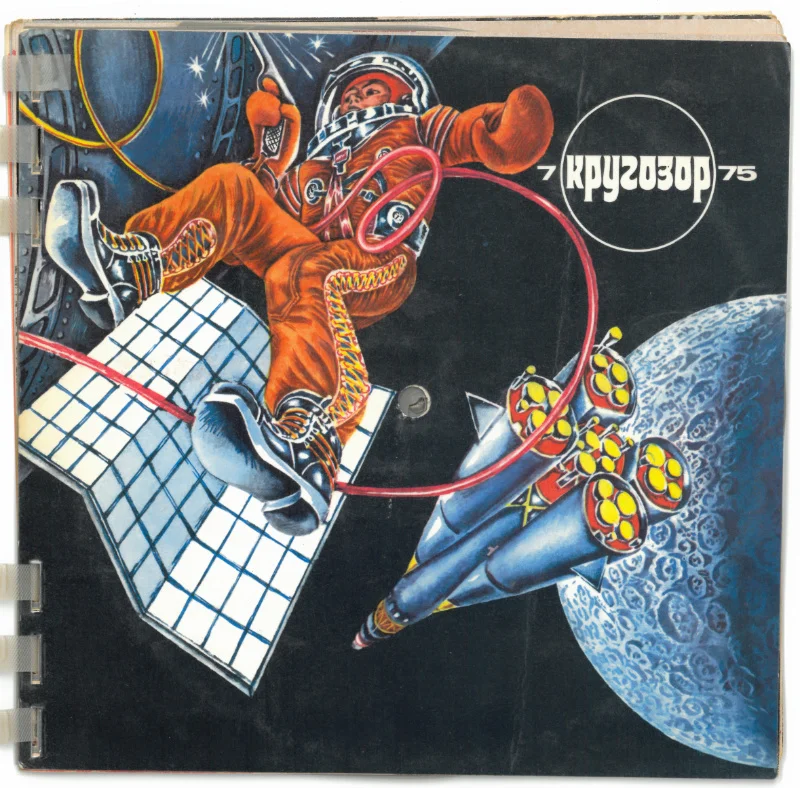
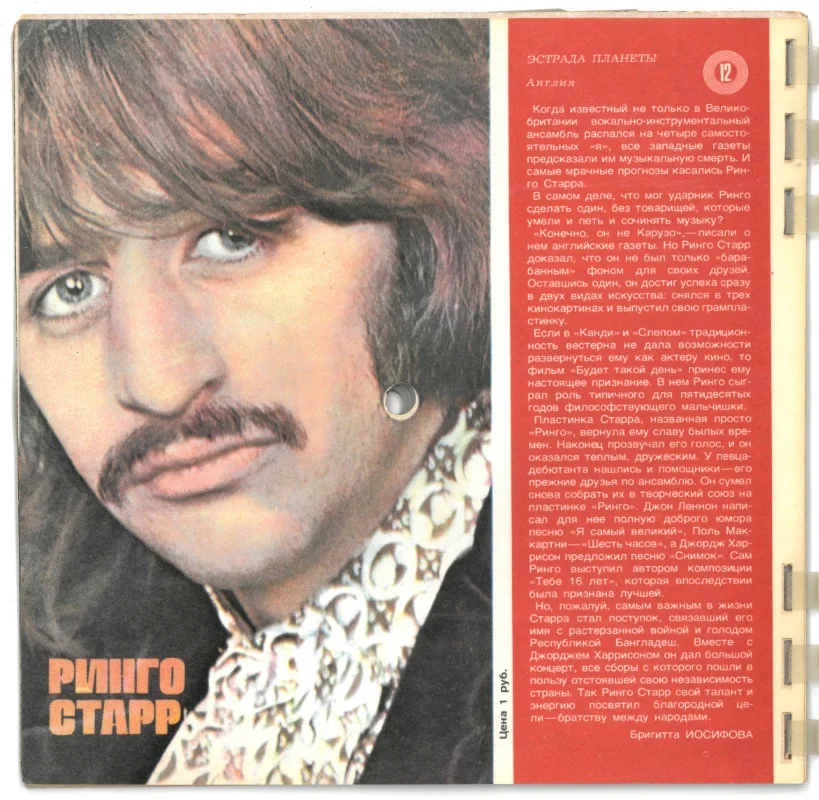
In 1975, Krugozor even featured two songs by Ringo Starr (No. 7, 1975).
Ringo Starr review in Krugozor magazine, 1975
When the vocal-instrumental ensemble, famous not only in Great Britain but also around the world, broke up into four independent groups, all the Western newspapers
predicted the group’s musical demise. The gloomiest of these predictions concerned Ringo Starr.
After all, what could a drummer do alone, without his singing and composing companions?
“Of course, he’s no Caruso,” British newspapers wrote about him. However, Ringo Starr proved that he was more than just a “barrel-chested” background for his friends.
On his own, he found success in two art forms: he starred in three films and released his own record.
While the traditional nature of the westerns Candy and The Blind Man prevented him from developing as a film actor, There Will Be a Day brought him real recognition. In it, he played a philosophical 1950s boy.Starr’s album, aptly titled Ringo, restored his former glory. Finally, his voice was heard, and it was warm and friendly. The debut album also featured his former bandmates. He brought them together again for the Ringo album. John Lennon wrote the humorous song “I’m the Greatest” for it, Paul McCartney wrote “Six Hours,” and George Harrison contributed “Snapshot.” Ringo himself wrote the song “
“You’re Sixteen,” which was later recognized as the best.
However, the most significant event in Starr’s life was his involvement with the war-torn and famine-stricken Republic of Bangladesh. Together with George Harrison, Starr held a large concert, donating all proceeds to the country that had defended its independence. Thus, Ringo Starr devoted his talent and energy to the noble cause of fostering brotherhood between nations.
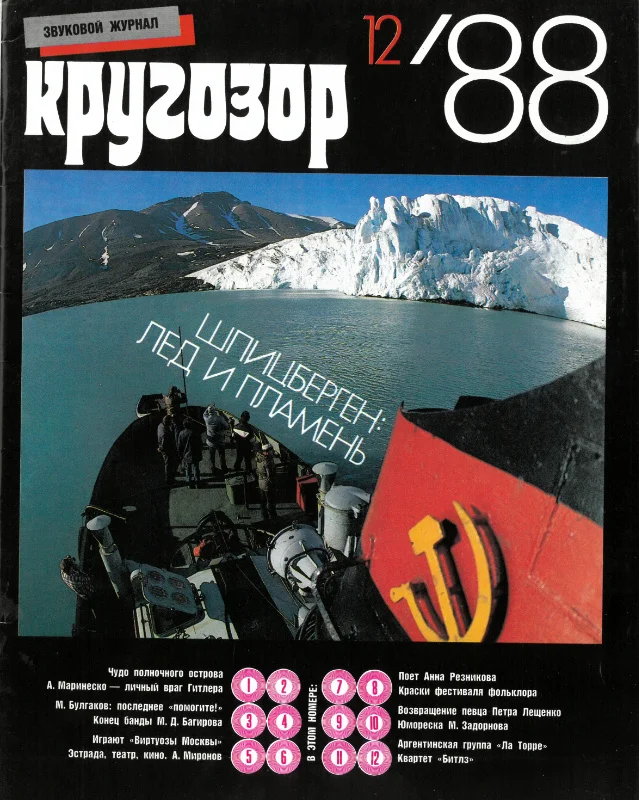
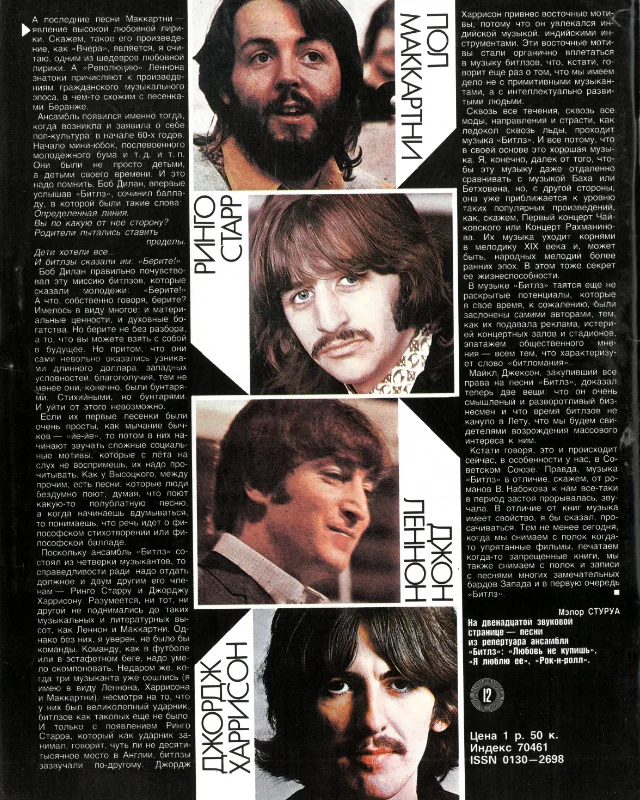
The last record and article about the Beatles in Krugozor appeared in 1988.
Official but Illegal: The Beatles on Soviet EPs (Vinyl Minions)
In the 1970s, The Beatles 7 inch EPs are slowly started to appear in the USSR. Melodiya used the same sleeve design for different albums without any titles. Sometimes the design included musical instruments or abstract graphics. Other times, it shows photos of the forest.
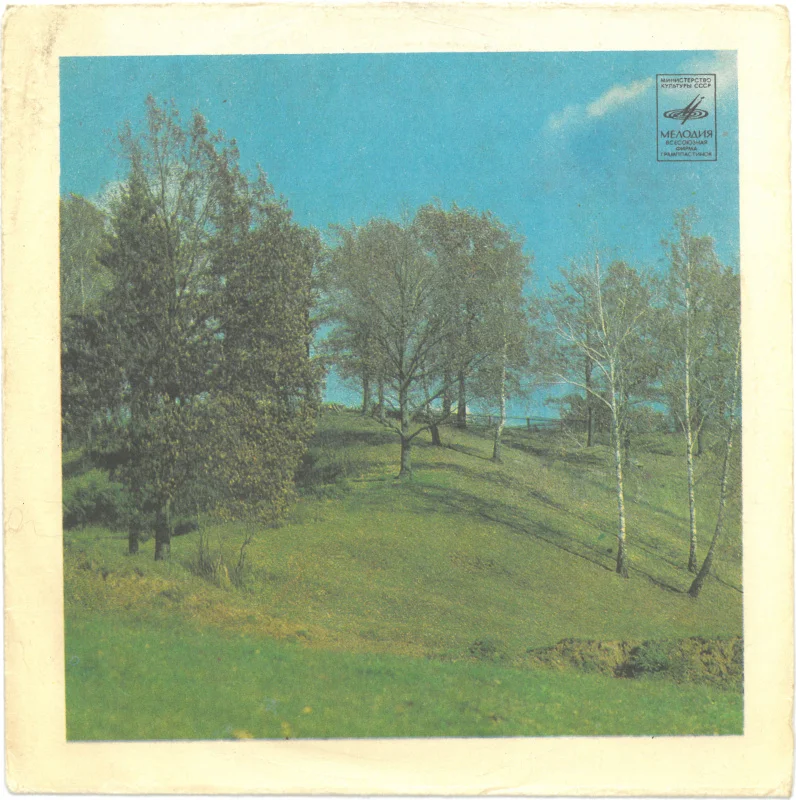
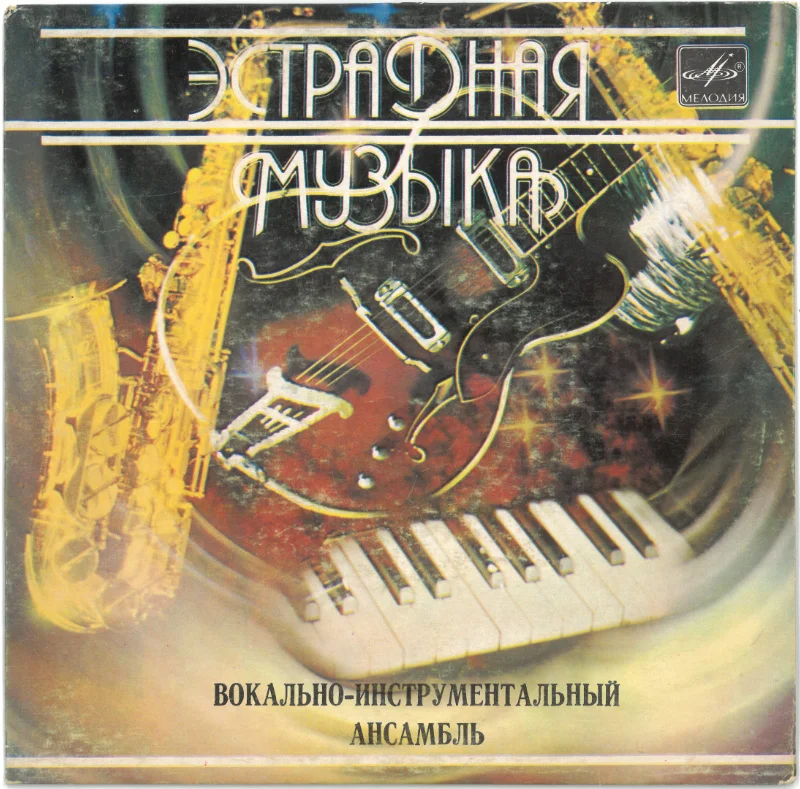
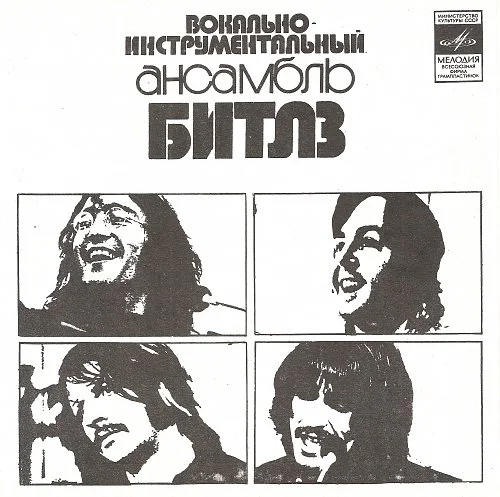
In 1974–75, five EPs also appeared with songs from Abbey Road (released in small portions), Let It Be, Sgt. Pepper’s, and various singles from different years. These EPs did not have album titles or the band’s name. All of these records were issued without licenses by various plants. It seems that only the Tbilisi plant printed sleeves with photos of the musicians.
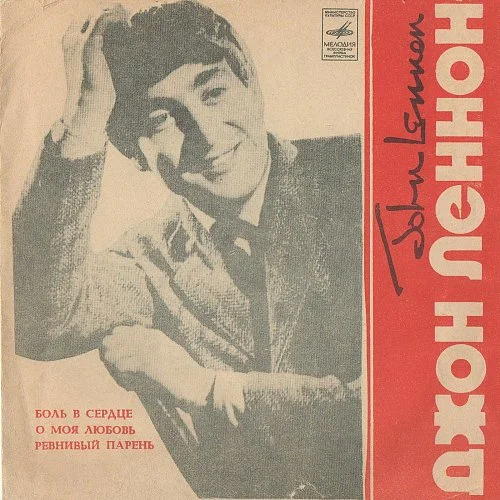

That same years, flexi-discs were released with Lennon’s “Jealous Guy,” “Crippled Inside” (which included a photo of Lennon), and “Oh My Love”; McCartney’s “Heart of the Country” and “Ram On”; and a disc with “Birthday” from the White Album (on the compilation Vocal-Instrumental Ensembles of the World).
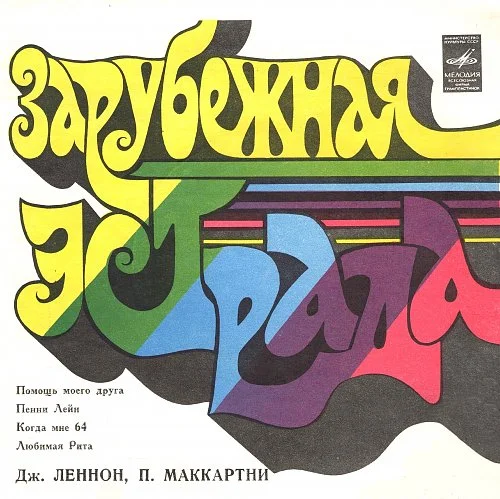
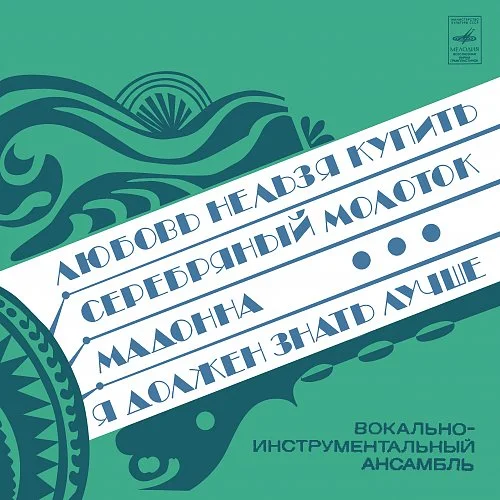
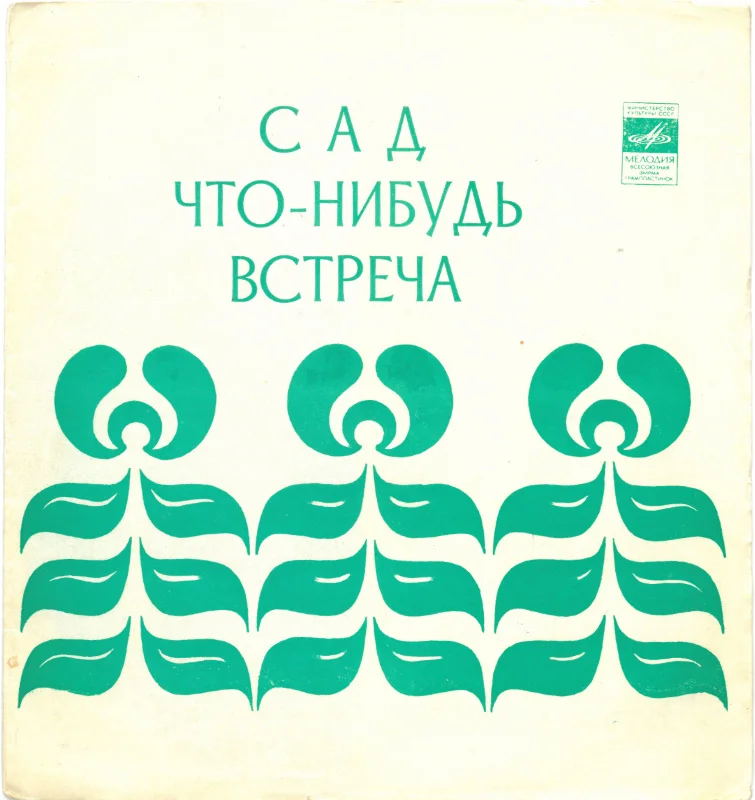
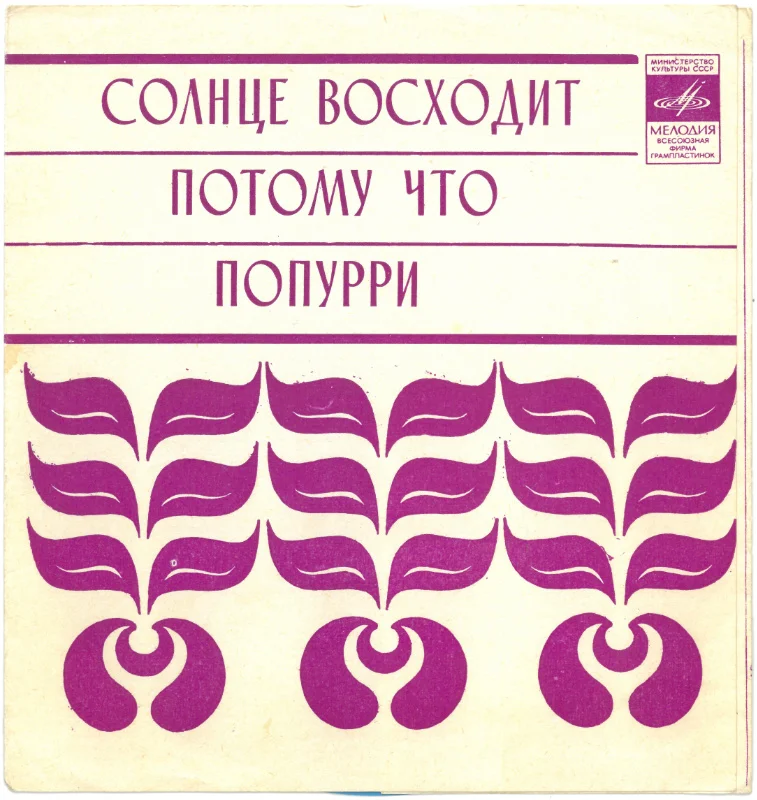
“All of them were snapped up,” Boris Bardash remembers. “Anyone who knew about it could immediately tell you the number of tracks and the titles: “The Sun Rises,” “Because,” “Medley”… EPs, but at 33 rpm—a Soviet thing. A Beatles compilation, one or two Creedence records, something from Deep Purple—that was the most you could get, and everyone who was into music had already bought them.”
Licensed Beatles Records in the USSR
Starting in 1973, licensed records began to appear, but with different covers and track lists.
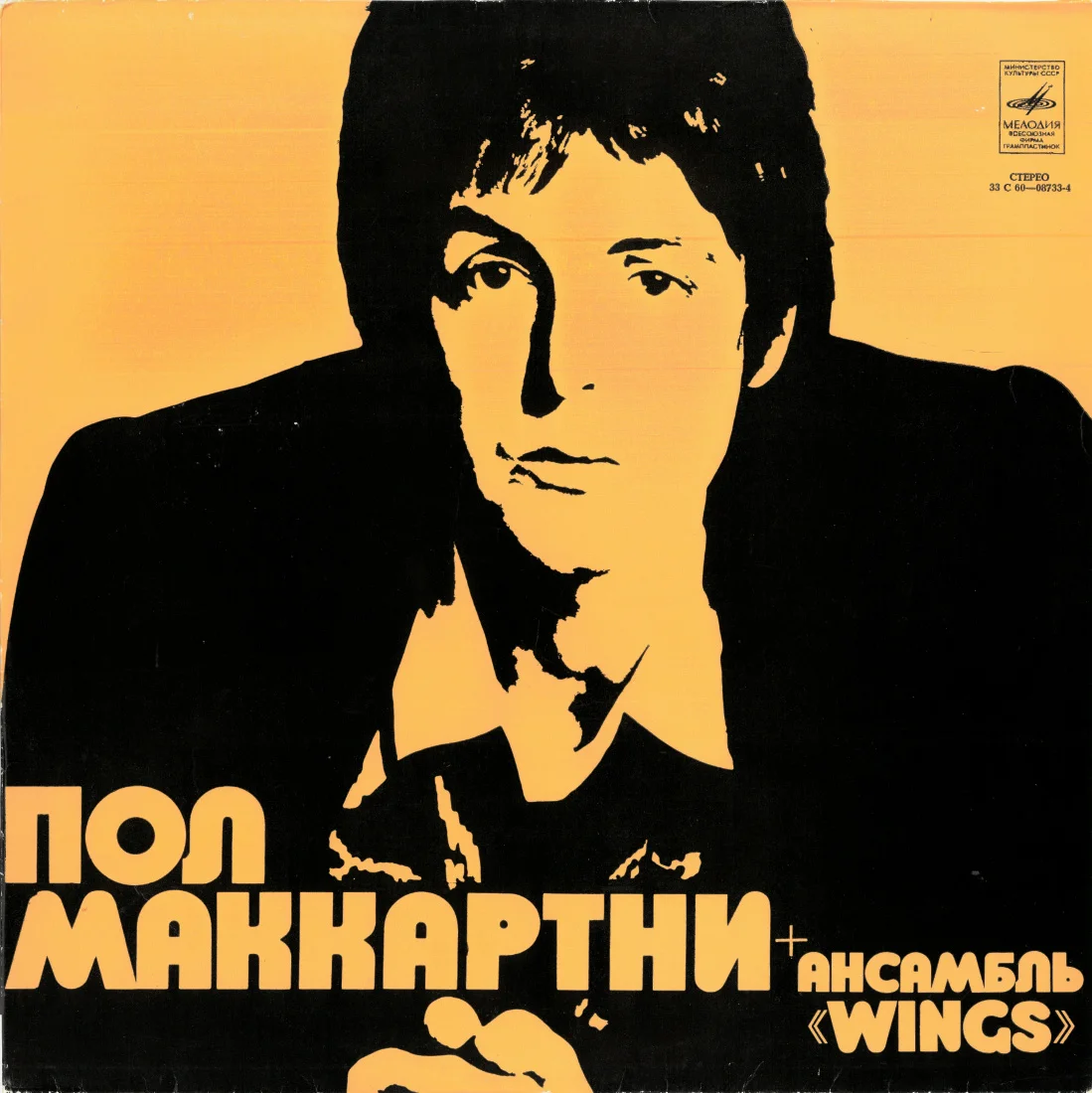
Soviet Band On The Run LP
In 1977, the albums John Lennon and Ensemble Wings were released. The first one was mostly the same as Imagine, with the back cover picture of Lennon facing the other way (it was moved to the front of the cover). The second one was based on Band on the Run, but it didn’t have the title track. Instead, it had a song called “Silly Love Songs.”
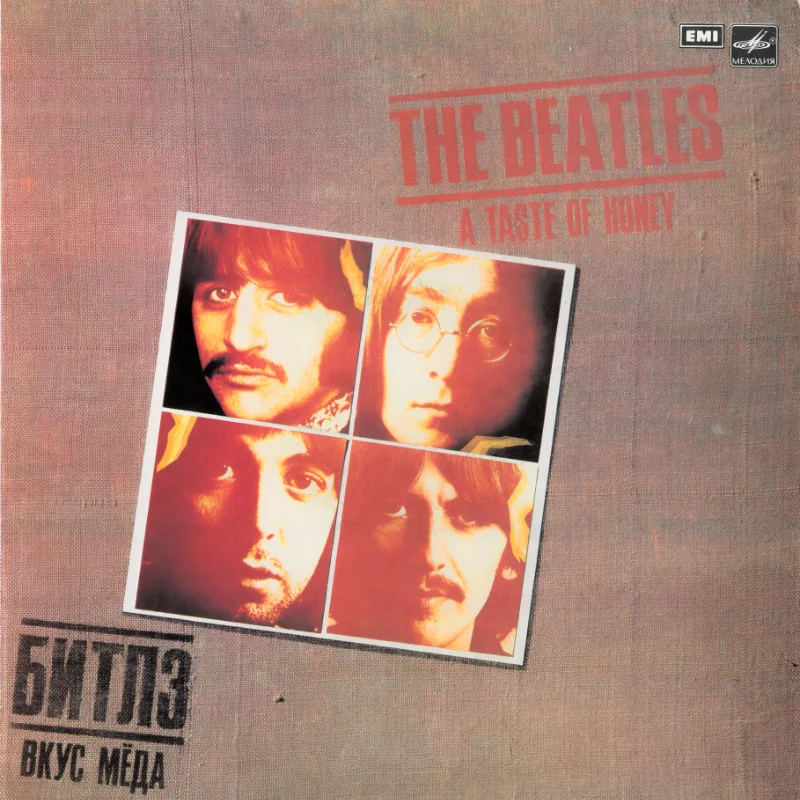
Taste of Honey — USSR Beatles LP
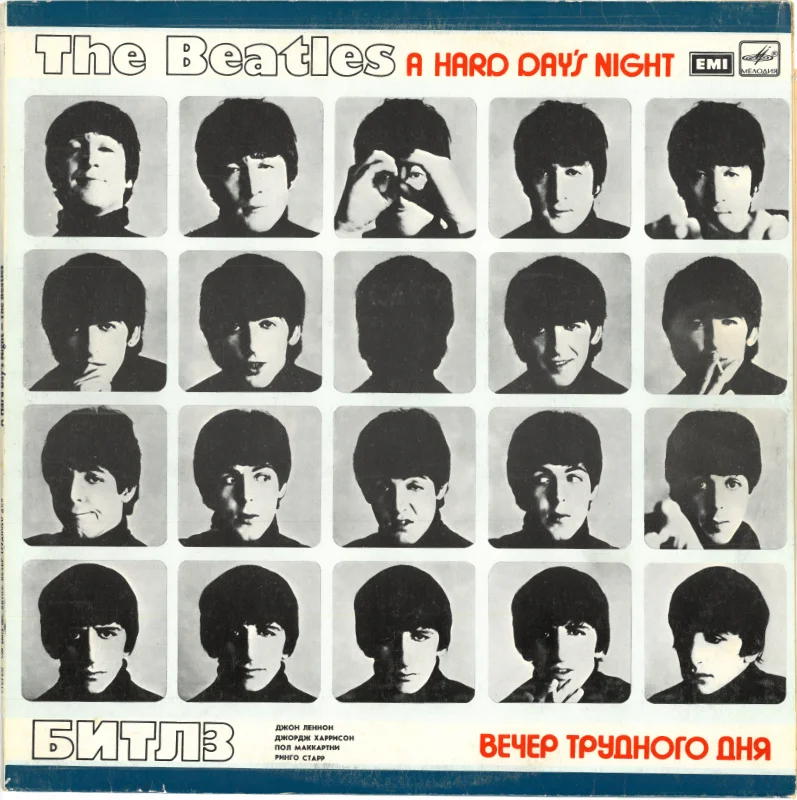
In 1986, Melodiya released two albums: a compilation called A Taste of Honey, which was made from the band’s first three albums, and the album A Hard Day’s Night.
Soviet Hard Day’s Night — Two LP Version
The A Hard Day’s Night album was released without “When I Get Home,” but it was mastered using DMM (Direct Metal Mastering). A total of 300,000 copies were made, and they all sold out as soon as they were put on sale.
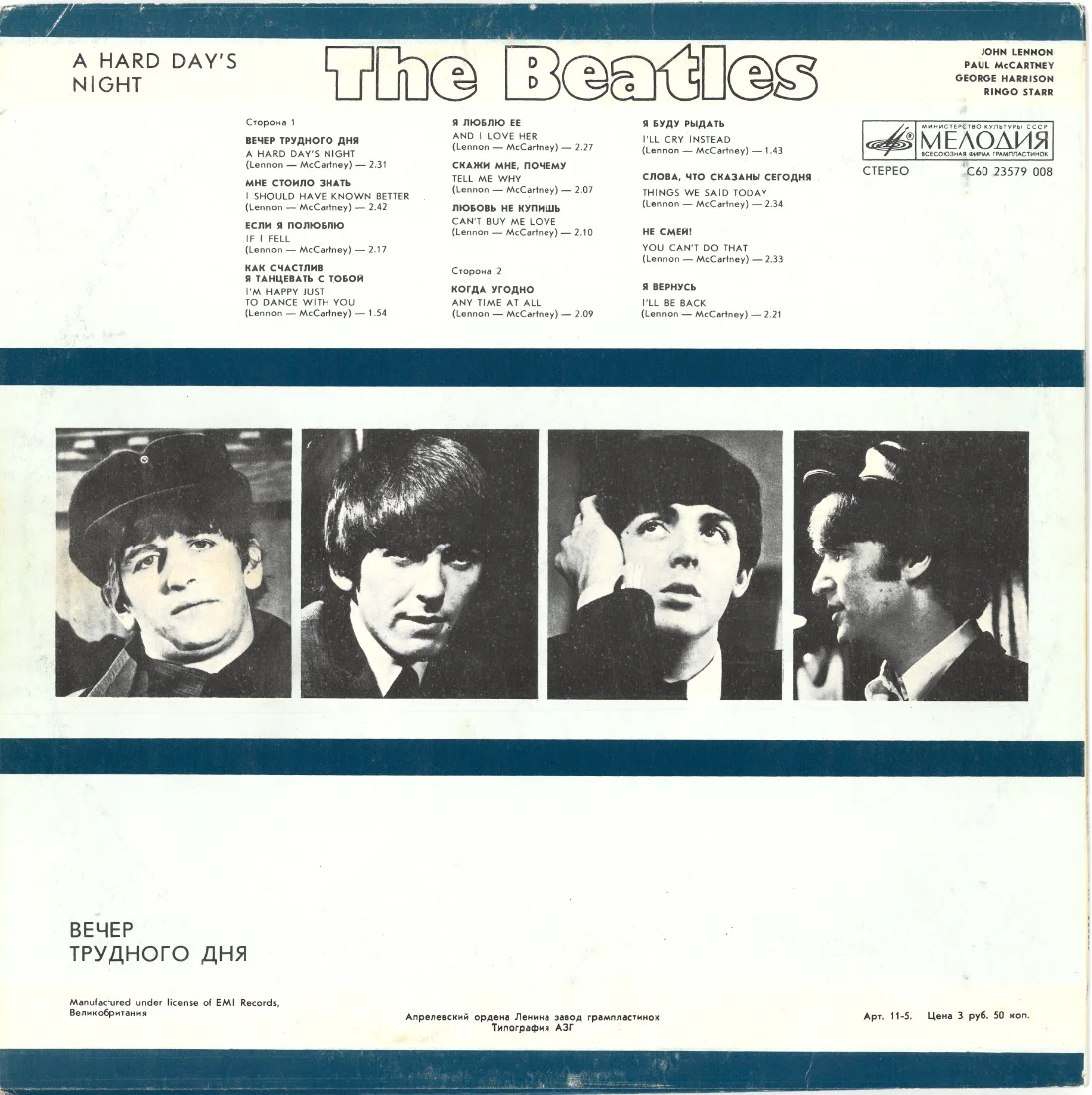
At the same time, a double set was released with A Taste of Honey and A Hard Day’s Night. The A Hard Day’s Night album came in a special sleeve, and it was pressed at the Aprelevka plant. Today, this sleeve is rare and can cost about $20.
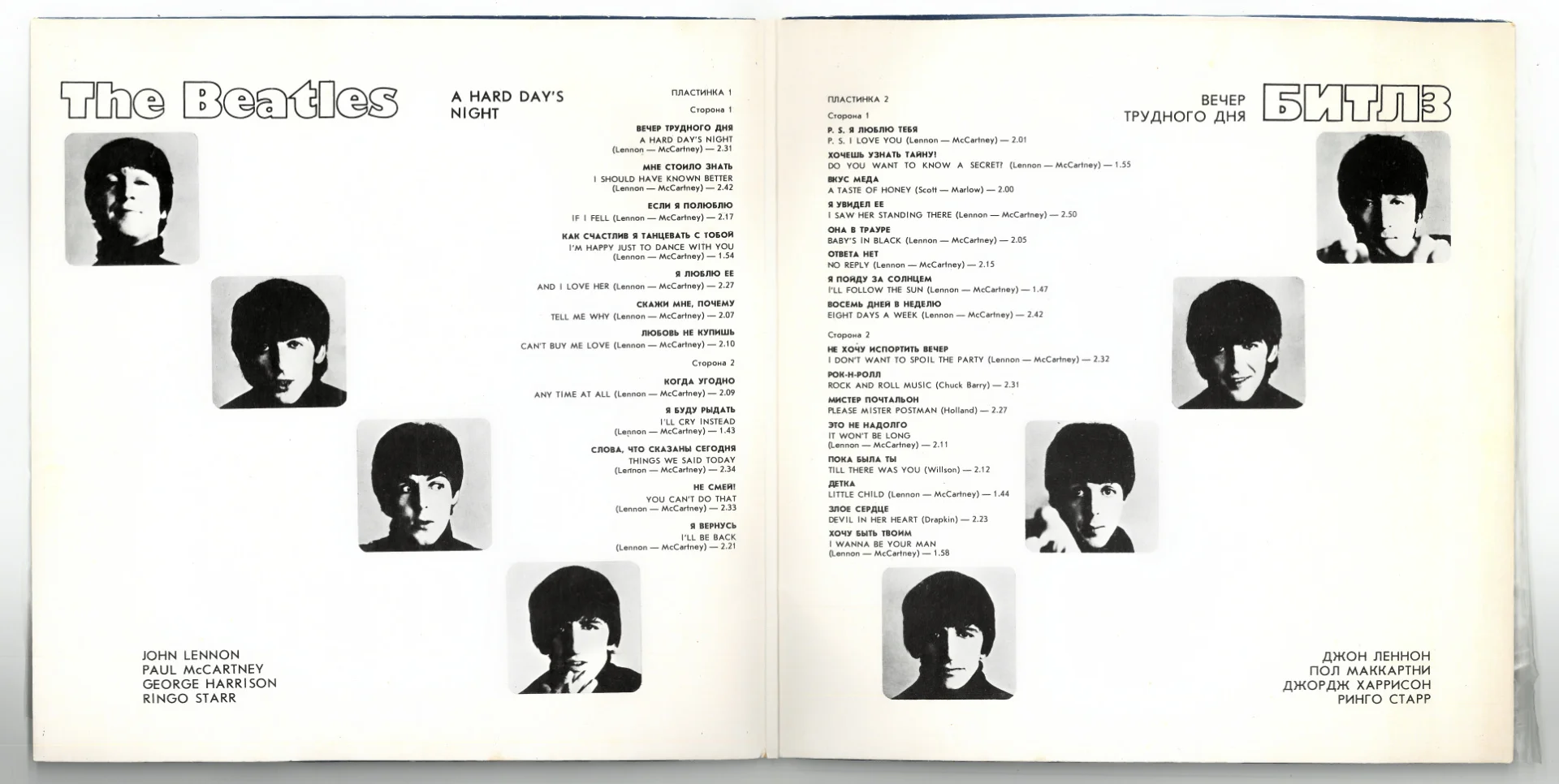
There are two reasons why “When I Get Home” wasn’t included in A Hard Day’s Night. The first one is more popular: Soviet censors rejected the line “I’m gonna love her till the cows come home” because they thought it was too indecent. The second option, which was more realistic, was buying licenses for individual songs to make a compilation. This was cheaper than buying the license for the original album.
McCartney’s Back to the USSR
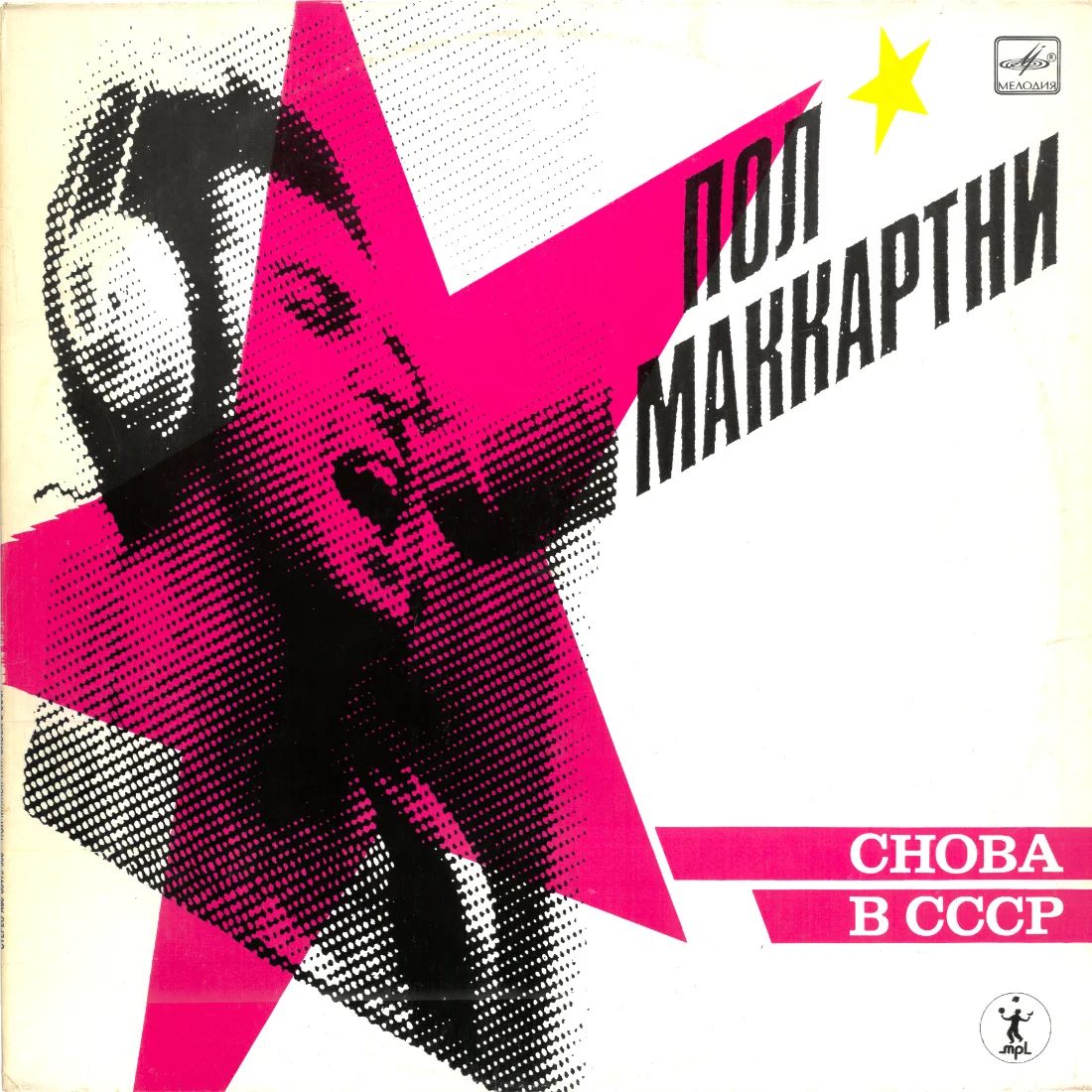
Also, there were two McCartney LPs: Flowers in The Dirt and Again in the USSR (CHOBA B CCCP / Снова в СССР ).
Unofficial Beatles Pressings (Late Soviet & Russian Releases)
AnTrop started releasing records with the White Album in 1991 and released almost all of the main studio albums, as well as the single “Hey Jude.” This marked the end of their records with Abbey Road.
By then, A Hard Day’s Night had already been officially released by Melodiya, while Please Please Me, With the Beatles, and the compilation Past Masters were issued slightly later by Santa Records without the active involvement of Andrei Tropillo.
Santa essentially continued AnTrop’s work at the same pressing plants, which were managed by Nikolai Kibalchich. I’ll add some of their releases as well later.
© 2025, Artur Netsvetaev, interview with Boris Bardash
Images: author’s archive, beatlespress.com.ua, beatlesvinyl.com.ua
Leave a Reply
You must be logged in to post a comment.